
Top-rated independent heating and cooling across southern Nevada and the desert Southwest
A Frozen AC Coil and What Causes the Ice
Your AC is running, the vents are blowing weak air that barely feels cool, and when you pull the filter you see frost or a block of ice on the indoor coil. Water may be dripping onto the floor. We repair frozen coils on homes across Arizona, California, Nevada and Utah. First step: turn the cooling off at the thermostat, leave the fan on, and call us.
Call (888) 560-0120- A real person answers
- Open 7 days
- Written quote before work starts
Taking calls until 5:00 PM PT
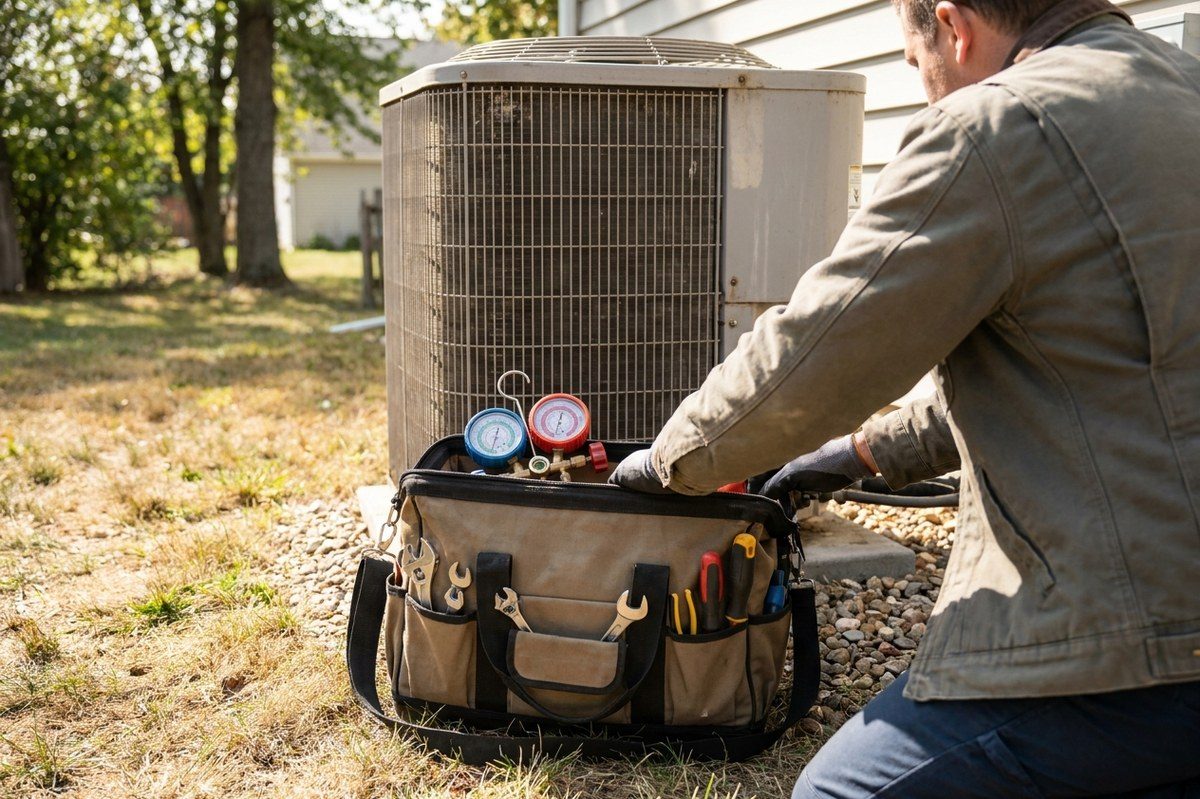
Phoenix Air Conditioning service team · field-reviewed before publishing
What ice on the coil actually means
A frozen evaporator coil is a symptom, not a cause. That coil gets cold on purpose, and moving house air across it keeps it just above freezing. Take away the airflow, or take away refrigerant, and the coil temperature drops below 32 degrees. Condensation on the fins turns to frost, frost turns to ice, and the ice blocks what little airflow was left. That is why the problem snowballs so fast on a hot afternoon. Once ice forms, the system stops cooling and the compressor outside is working against conditions it was never designed for. Shutting cooling off and running the fan thaws it, but the underlying fault is still there.
Cause one: airflow, and it is usually the filter
Start with the cheapest and most common family. A filter loaded with dust chokes the coil, and in our part of the country filters load up faster than the label suggests. Closed or blocked supply vents do the same thing, as do furniture and rugs over floor registers. Crushed or disconnected flex duct in an attic starves the coil even with a clean filter. Further along that same list sits a weak blower motor, a slipping wheel packed with dust, or a coil so dirty on the fin face that air cannot pass through it. Airflow faults are the repairs we make most often, and they are usually the least expensive to fix.
Cause two: low refrigerant, and cause three: controls
If airflow checks out, low refrigerant charge is the next family. Refrigerant does not get used up. If the charge is low, there is a leak, often at a coil, a service valve, or a line set joint. Low charge drops pressure inside the coil, the coil runs colder than design, and it ices. Adding refrigerant without finding the leak just buys a few weeks. Third family: controls and metering. A stuck expansion valve, a failed blower relay, a thermostat set to run cooling nonstop through a cool night, or a defective indoor fan control can all produce the same ice. These need gauges and readings, not guesses.
What you can safely check yourself
Set the thermostat to off for cooling and set the fan to on. That thaws the coil with moving air instead of a hair dryer or a screwdriver. Put towels down for melt water. While it thaws, change the filter for a clean one of the same size, then walk the house and confirm supply and return vents are open and clear of furniture. Check the breaker panel for a tripped breaker, and check thermostat batteries and settings. Outside, clear leaves, dust, tumbleweed and stored items back from the condenser. That is the safe list. Refrigerant, gas and high-voltage work is not homeowner territory, and opening a sealed system without training makes the repair bigger.
What a technician does differently
We measure instead of guessing. After the coil thaws we take static pressure and temperature split across the coil to see whether air volume is actually where it should be, then put gauges on to read suction pressure, superheat and subcooling. Those numbers separate an airflow problem from a charge problem in minutes. If it reads low on charge, we look for the leak with electronic detection or nitrogen pressure rather than topping it off. We check the metering device, the blower speed tap or motor programming, and the condensate drain, because a coil that has been icing repeatedly has often flooded the pan too. Then we tell you what failed and what the repair involves.
When it is time to book
A Frozen AC Coil and What Causes the Ice — what people ask
How long does it take a frozen coil to thaw?
With cooling off and the fan running, most coils thaw in one to three hours. A solid block of ice can take longer. Never chip at it with a tool, since the fins and tubing damage easily and that turns a repair into a coil replacement.
Can I keep running the AC if the coil keeps freezing?
No. Running it iced up starves the compressor of proper refrigerant flow and can wash oil back into it. That is one of the more expensive failures on the system. Shut cooling off, run the fan, and get the cause diagnosed.
Why does it freeze up more at night?
Cooler outdoor air lowers system pressures, so a coil that is already borderline on airflow or charge tips below freezing overnight. It is a strong hint that something is marginal, and it will show up during the day once conditions shift.
How it works
- Step 1
Tell us the symptom
Call or fill out the quote form. We ask what changed, when it started, and whether the outdoor unit is running. That tells us which parts and gauges to load on the truck before we leave.
- Step 2
We diagnose on site
We check the thermostat, the electrical side, airflow, refrigerant pressures, and the condenser coil. Desert dust plugs coils and dying capacitors are common. You get the finding in plain words before we touch a part.
- Step 3
Repair and verify
We make the repair, then run the system and measure supply air temperature and amp draw so we know it is actually cooling or heating. We tell you what we saw and what to watch for next season.
- A real person answers
- Open 7 days
- Written quote before work starts
Why homeowners call us
- We know rooftop unitsHalf the valley has a package unit on the roof, baking all summer. We are up there regularly, so we know how those cabinets fail, where the drain pans rust, and how heat and sun break down wiring and blower assemblies.
- Dust is the local enemyFine desert dust mats onto condenser coils and chokes airflow, and the system runs hot until something gives up. We check the coil on every call and tell you honestly whether cleaning will fix your cooling problem.
- July gets treated like JulyA dead condenser when it is 112 outside is not a routine call. We prioritise homes with no cooling, and we say clearly when we can be there instead of leaving you guessing all afternoon.
- Heating tooDesert nights get cold and furnaces sit unused for months. We do heater repair and furnace repair, including no-ignition problems, bad igniters, and blowers that hum without moving air. Same straight explanation, no upsell speech.
- All major brands, gas & electricIndependent service on Carrier, Trane, Lennox, Goodman, York and the rest.
- Straight answersIf a system is not worth repairing, we say so, often right on the phone.
About this guide
When the easy checks change nothing, it's time for a tech
Report what you saw during the checks and we handle the rest. A minute to book.
- A real person answers
- Open 7 days
- Written quotes
- All major brands
- Gas & electric
Rather not call? Get a free quote →