
Top-rated independent heating and cooling across southern Nevada and the desert Southwest
The Condensate Line
Your AC pulls water out of the air all summer, and that water has to go somewhere. The condensate line is the pipe that carries it out. When it clogs, water backs up into the pan, then onto your ceiling, your closet floor, or the roof deck. We repair condensate problems for homeowners across Arizona, California, Nevada and Utah. Here is how to keep yours clear.
Call (888) 560-0120- A real person answers
- Open 7 days
- Written quote before work starts
Taking calls until 5:00 PM PT
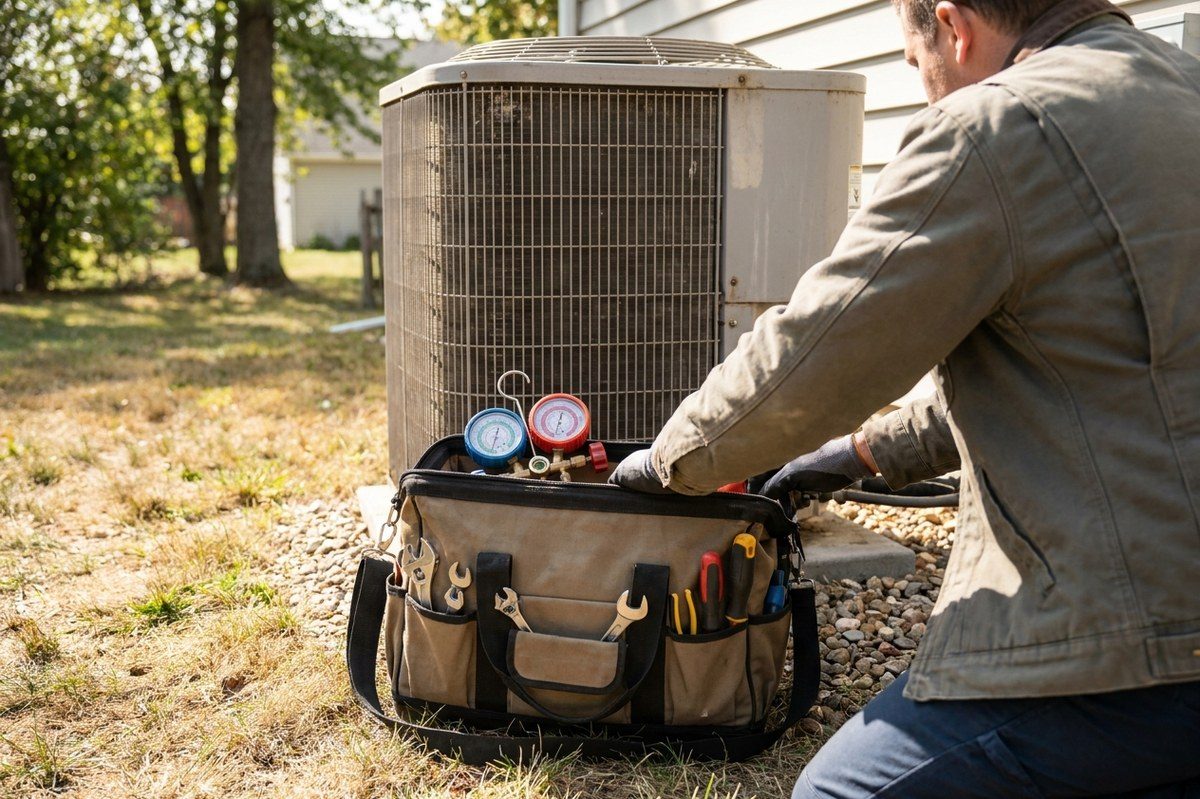
Phoenix Air Conditioning service team · field-reviewed before publishing
What Neglect Does Over Time
A condensate line clogs slowly. Dust pulled through the return sticks to the wet walls of the pipe and mixes with algae into a soft plug. At first the water just drains slower. Then the pan holds standing water, which rusts the pan and grows a smell you notice at the vents. Eventually the pan overflows. On a rooftop package unit that water runs across the deck and finds a seam. On an attic or closet unit it comes through drywall. Most systems have a float switch that shuts the AC off before that happens, and that is the call we get: no cooling in July, water sitting in the pan.</p>
The Simple Habit That Prevents It
Two things, and neither one is complicated. First, change your filter on schedule. Less dust through the coil means less mud in the drain line. In our region, with the dust we get, that often means more often than the box suggests. Second, learn where your condensate line ends. It is usually a white PVC pipe that drips outside near the foundation, or a copper stub on the roof. Look at it on a hot afternoon while the AC is running. If it is dripping steadily, water is moving. If it is bone dry in the middle of a heat wave, something is wrong.
How Often To Check It
Walk the drain line outlet once a month during cooling season, and glance at it again when you swap the filter. That is a thirty second look, not a project. A full clearing of the line and a check of the pan and float switch belongs in a yearly service visit before the heat arrives, because that is when we can flush the line properly and confirm the safety switch actually shuts the system down. Homes with the air handler in an attic or a closet over finished space benefit most from the annual visit. That is where a slow leak does the expensive damage.
Warning Signs It Is Already Too Late
Call us if you see water stains on a ceiling below the air handler, water pooling around the indoor unit, or a musty smell coming from the supply vents. Another common sign is an AC that runs a while, then quits, then runs again later. That is often the float switch doing its job. Higher humidity indoors with the system running can also point to a drain problem. If you find standing water near electrical components, leave it alone and shut the system off at the thermostat. Then call us for air conditioning repair and we will find where the water is stopping.
What We Do On A Condensate Call
We start at the pan and the float switch, then clear the line from the outlet back. Sometimes that is a straightforward flush. Sometimes the line has the wrong slope from the day it was installed, or a trap that holds sludge, and it will clog again every season until the piping is corrected. We check the coil too, because a dirty coil throws more water than the drain was sized for. On rooftop package units we look at how the water leaves the cabinet and where it lands, since a bad drain on a roof turns into a roofing problem fast.
When it is time to book
The Condensate Line — what people ask
Can I pour something down the drain line myself?
You can pour a cup of distilled white vinegar into an accessible cleanout on the drain line. That helps with algae. It will not move a solid plug, and it will not tell you whether the pan or float switch is working. Call us for that.
Why does my AC shut off and then start again on its own?
Often the float switch in the condensate pan is tripping when water backs up, then resetting as the level drops. It is protecting your ceiling. Have the line cleared before the pan overflows and the cycling gets worse.
Does dry desert air mean less condensate?
Less than a humid climate, yes, but far from none. Systems here run long hours and still produce real volumes of water, and our dust builds plugs quickly. Dry air does not exempt you from checking the drain line.
How it works
- Step 1
Tell us the symptom
Call or fill out the quote form. We ask what changed, when it started, and whether the outdoor unit is running. That tells us which parts and gauges to load on the truck before we leave.
- Step 2
We diagnose on site
We check the thermostat, the electrical side, airflow, refrigerant pressures, and the condenser coil. Desert dust plugs coils and dying capacitors are common. You get the finding in plain words before we touch a part.
- Step 3
Repair and verify
We make the repair, then run the system and measure supply air temperature and amp draw so we know it is actually cooling or heating. We tell you what we saw and what to watch for next season.
- A real person answers
- Open 7 days
- Written quote before work starts
Why homeowners call us
- We know rooftop unitsHalf the valley has a package unit on the roof, baking all summer. We are up there regularly, so we know how those cabinets fail, where the drain pans rust, and how heat and sun break down wiring and blower assemblies.
- Dust is the local enemyFine desert dust mats onto condenser coils and chokes airflow, and the system runs hot until something gives up. We check the coil on every call and tell you honestly whether cleaning will fix your cooling problem.
- July gets treated like JulyA dead condenser when it is 112 outside is not a routine call. We prioritise homes with no cooling, and we say clearly when we can be there instead of leaving you guessing all afternoon.
- Heating tooDesert nights get cold and furnaces sit unused for months. We do heater repair and furnace repair, including no-ignition problems, bad igniters, and blowers that hum without moving air. Same straight explanation, no upsell speech.
- All major brands, gas & electricIndependent service on Carrier, Trane, Lennox, Goodman, York and the rest.
- Straight answersIf a system is not worth repairing, we say so, often right on the phone.
About this guide
Safe checks done and it still misbehaves? That's a real fault
Mention which checks you ran when you book; it speeds up the visit.
- A real person answers
- Open 7 days
- Written quotes
- All major brands
- Gas & electric
Rather not call? Get a free quote →