
Top-rated independent heating and cooling across southern Nevada and the desert Southwest
Getting Cooling Ready Before the First Hot Week
You want the AC to work on the first 105 degree day, and you would rather find out now than at 4 p.m. on a Saturday. That is fair. A pre-season check is mostly about catching the small stuff, a weak capacitor, a filthy coil, a clogged drain, while the weather still gives you room to fix it without sweating through the wait.
Call (888) 560-0120- A real person answers
- Open 7 days
- Written quote before work starts
Taking calls until 5:00 PM PT
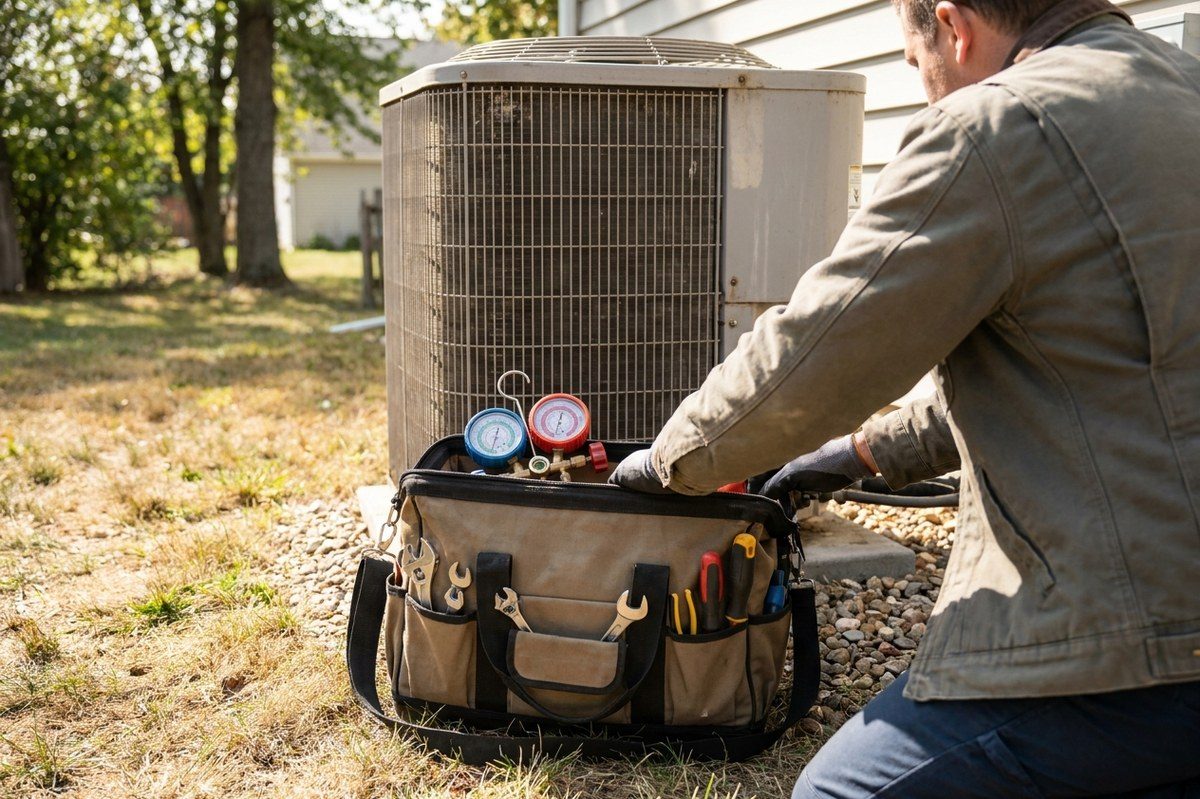
Phoenix Air Conditioning service team · field-reviewed before publishing
What Spring Does To A System That Sat All Winter
Across Nevada, Arizona, California and Utah, most cooling systems idle for months and then get asked to run nearly non-stop. Bearings that were quiet in March start whining in June. Contactors that closed fine at 80 degrees pit and stick at 108. Dust is the other half of the story. Wind, construction and dry ground pack outdoor coils solid, and a packed coil cannot dump heat, so the compressor runs hotter and longer for less cooling inside. Rooftop package units get it worst because nobody looks at them. Run your AC for a full hour on a mild day and pay attention to how fast it cools and whether the air at the vents feels genuinely cold.
Which Failures Spike, And When
Late April through May, we get calls about systems that will not start at all. That is usually a run capacitor or a contactor that gave up over the winter, and it shows up the first time the unit is asked to do real work. June and July bring the heat-driven failures: low refrigerant charge from a leak that was survivable in spring, compressors overloaded by dirty coils, blower motors quitting, and condensate drains backing up and tripping a safety switch. August adds storm damage and grit. If your air conditioner repair history includes anything you shrugged off last summer, that is the part most likely to fail again.
The Safe Checks You Can Do Yourself
Start at the thermostat. Fresh batteries, set to cool, fan on auto, and a setpoint clearly below room temperature. Then look at your breaker panel for a tripped breaker. Reset it once, and if it trips again, stop and call us, because something downstream is drawing more current than it should. Change the filter, and if it looks grey and matted, shorten your replacement interval. Walk the outdoor unit and clear weeds, bags, cardboard and gravel from the sides so air can move. Inside, confirm supply and return vents are open and not blocked by furniture or rugs. That is the whole safe list. Anything involving refrigerant, gas or high voltage is ours.
What We Check On A Pre-Season Visit
We measure instead of guessing. That means electrical readings on the capacitor, contactor and motors, refrigerant pressures and temperature split across the coil, amp draw on the compressor and blower, and a look at the condensate drain and safety switch. On rooftop package units we also check the cabinet, panel screws, belt condition where there is one, and whether flashing and curb seals are still keeping water out. We clean the condenser coil when it needs it, because that single job changes how hard the whole system works. If we find a part that is drifting out of range, you get told now and you decide, rather than finding out in July.
When To Call Instead Of Waiting
Call for air conditioning repair if the unit trips a breaker more than once, if the outdoor fan runs but the air inside stays warm, if you hear grinding or a hard hum at startup, if there is water around the indoor unit, or if the system runs constantly and never reaches the setpoint. Ice on the lines or the indoor coil means shut it off and call, because running it that way strains the compressor. If you ever smell gas near your heating equipment, leave the building first, call 911 or your gas utility from outside, then call us. We work across Nevada, Arizona, California and Utah, and a spring appointment is far easier to get than a July one.
Getting Cooling Ready Before the First Hot Week — what people ask
When is the best time to get an AC checked in the desert?
February through April. The equipment is cool enough to test properly, parts are easier to get, and you are not waiting behind emergency calls. By the first stretch of triple-digit days, the schedule is already full.
My AC cooled fine last summer. Do I still need a check?
A system can cool adequately while a capacitor weakens or refrigerant slowly leaks. Those problems show up on the hottest day, not the mild one. Measuring now tells you what the season will actually demand.
How often should I change the filter out here?
More often than the box says. Dust and construction grit load filters fast across the region. Look at it monthly during cooling season and replace it when it looks grey and matted, not on a fixed calendar date.
How it works
- Step 1
Tell us the symptom
Call or fill out the quote form. We ask what changed, when it started, and whether the outdoor unit is running. That tells us which parts and gauges to load on the truck before we leave.
- Step 2
We diagnose on site
We check the thermostat, the electrical side, airflow, refrigerant pressures, and the condenser coil. Desert dust plugs coils and dying capacitors are common. You get the finding in plain words before we touch a part.
- Step 3
Repair and verify
We make the repair, then run the system and measure supply air temperature and amp draw so we know it is actually cooling or heating. We tell you what we saw and what to watch for next season.
- A real person answers
- Open 7 days
- Written quote before work starts
Why homeowners call us
- We know rooftop unitsHalf the valley has a package unit on the roof, baking all summer. We are up there regularly, so we know how those cabinets fail, where the drain pans rust, and how heat and sun break down wiring and blower assemblies.
- Dust is the local enemyFine desert dust mats onto condenser coils and chokes airflow, and the system runs hot until something gives up. We check the coil on every call and tell you honestly whether cleaning will fix your cooling problem.
- July gets treated like JulyA dead condenser when it is 112 outside is not a routine call. We prioritise homes with no cooling, and we say clearly when we can be there instead of leaving you guessing all afternoon.
- Heating tooDesert nights get cold and furnaces sit unused for months. We do heater repair and furnace repair, including no-ignition problems, bad igniters, and blowers that hum without moving air. Same straight explanation, no upsell speech.
- All major brands, gas & electricIndependent service on Carrier, Trane, Lennox, Goodman, York and the rest.
- Straight answersIf a system is not worth repairing, we say so, often right on the phone.
About this guide
Checked everything on the list and it still acts up?
Describe what you found and we'll take it from there. Booking takes about a minute.
- A real person answers
- Open 7 days
- Written quotes
- All major brands
- Gas & electric
Rather not call? Get a free quote →