
Top-rated independent heating and cooling across southern Nevada and the desert Southwest
When a Furnace Is Worth Fixing, and When It Isn't
Your furnace quit on a cold morning, and now someone has to tell you whether it is worth fixing or whether you are buying a new one. We handle heating repair and furnace repair for homeowners across Arizona, California, Nevada and Utah, and we will tell you plainly which way we would lean and why. Here is how that call gets made.
Call (888) 560-0120- A real person answers
- Open 7 days
- Written quote before work starts
Taking calls until 5:00 PM PT
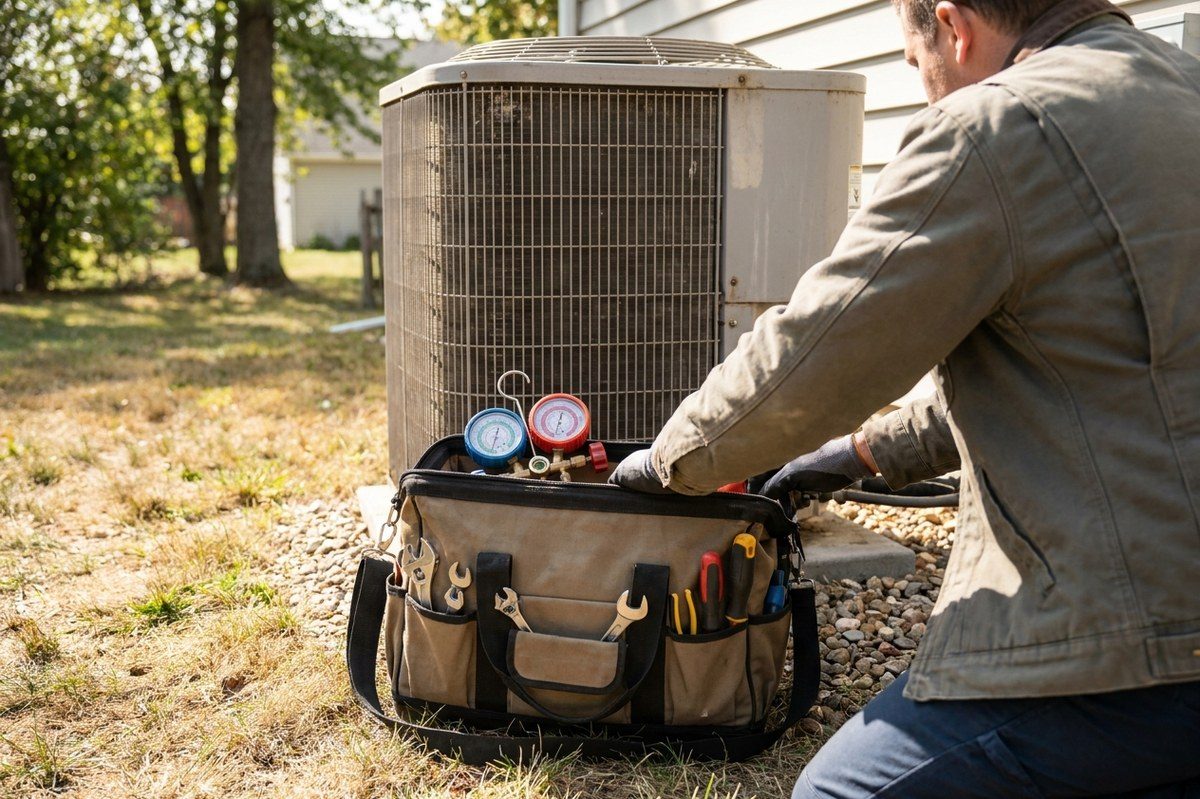
Phoenix Air Conditioning service team · field-reviewed before publishing
Age matters, but it is not the whole answer
A furnace that has been heating your house for a long stretch and is now on its second or third significant failure is telling you something. But age alone does not condemn a system. We see older units in dry climates that were installed well, kept clean, and still run true, and we see much younger ones ruined by a filter nobody changed and a return that was undersized from day one. What we look at is the condition of the heat exchanger, the state of the wiring and gas train, and how many separate faults are stacking up. One tired part on an otherwise sound furnace is a repair. Several failing systems at once is a replacement conversation.
The type of fault changes everything
Some faults are routine. Igniters, flame sensors, pressure switches, capacitors, control boards and blower motors are the parts that wear out, and replacing them is normal heating repair work that buys you real years. Other faults are different in kind. A cracked or corroded heat exchanger is a combustion safety problem, and we do not patch those. A seized inducer on a furnace that also has a rusted burner assembly and a failing board is three repairs pretending to be one. We separate wear items from structural failures, tell you which bucket yours falls in, and let that drive the decision rather than the calendar.
Parts availability and whether the system still matches
An older furnace can be perfectly repairable right up until the part stops existing. When a control board or a specific gas valve is discontinued and the aftermarket options are thin, a straightforward furnace repair turns into a wait and a gamble. We check availability before we quote anything. The other question is matching. Many homes across the region run a shared blower with the cooling side, so a furnace decision is often an AC decision too. If the outdoor unit is on borrowed time or the refrigerant type is obsolete, replacing both together usually makes more sense than paying twice for two separate visits and two separate disruptions.
How we think about it on the visit
We start with the symptom and work backward. Static pressure, temperature rise, gas pressure, flame quality, amp draws on the motors, and a real look at the heat exchanger and burners. That tells us whether the failure is the whole story or a symptom of something upstream, like restricted airflow cooking components year after year. Then we lay out the options in plain terms: what the repair fixes, what it does not fix, what else on the furnace is close to the end, and what we would expect over the next few seasons. You get the findings, not a sales pitch. If a repair is the right move, we say so.
Honest cases where replacement wins
Replacement is the better call when the heat exchanger has failed, when several major components are going at once, when parts are no longer supported, or when the furnace has never heated the house evenly because it was the wrong size for the ductwork. It also wins when the cooling side is finished and you are looking at two aging halves of one system. If you ever smell gas or a carbon monoxide alarm sounds, leave the building first, call 911 or your gas utility from outside, then call us. Safety comes before any repair decision. Everything else we can talk through calmly.
When a Furnace Is Worth Fixing, and When It Isn't — what people ask
Can you tell me over the phone if my furnace is worth repairing?
Not honestly. We can tell you what a symptom usually means, but the heat exchanger, gas pressure and motor readings decide it. Those need a technician in front of the furnace before anyone gives you a real answer.
Is it worth repairing a furnace that is already old?
Sometimes, yes. An older furnace with one worn wear item and a sound heat exchanger is often a sensible repair. An older furnace with multiple failing components or discontinued parts is usually money spent twice.
Should I replace the air conditioner at the same time?
If the two share a blower and the cooling side is also near the end, doing both together avoids paying for two installations and two disruptions. If your AC is in good shape, there is no reason to touch it.
How it works
- Step 1
Tell us the symptom
Call or fill out the quote form. We ask what changed, when it started, and whether the outdoor unit is running. That tells us which parts and gauges to load on the truck before we leave.
- Step 2
We diagnose on site
We check the thermostat, the electrical side, airflow, refrigerant pressures, and the condenser coil. Desert dust plugs coils and dying capacitors are common. You get the finding in plain words before we touch a part.
- Step 3
Repair and verify
We make the repair, then run the system and measure supply air temperature and amp draw so we know it is actually cooling or heating. We tell you what we saw and what to watch for next season.
- A real person answers
- Open 7 days
- Written quote before work starts
Why homeowners call us
- We know rooftop unitsHalf the valley has a package unit on the roof, baking all summer. We are up there regularly, so we know how those cabinets fail, where the drain pans rust, and how heat and sun break down wiring and blower assemblies.
- Dust is the local enemyFine desert dust mats onto condenser coils and chokes airflow, and the system runs hot until something gives up. We check the coil on every call and tell you honestly whether cleaning will fix your cooling problem.
- July gets treated like JulyA dead condenser when it is 112 outside is not a routine call. We prioritise homes with no cooling, and we say clearly when we can be there instead of leaving you guessing all afternoon.
- Heating tooDesert nights get cold and furnaces sit unused for months. We do heater repair and furnace repair, including no-ignition problems, bad igniters, and blowers that hum without moving air. Same straight explanation, no upsell speech.
- All major brands, gas & electricIndependent service on Carrier, Trane, Lennox, Goodman, York and the rest.
- Straight answersIf a system is not worth repairing, we say so, often right on the phone.
About this guide
If the safe checks didn't fix it, the fault is real
Mention which checks you ran when you book; it speeds up the visit.
- A real person answers
- Open 7 days
- Written quotes
- All major brands
- Gas & electric
Rather not call? Get a free quote →