
Top-rated independent heating and cooling across southern Nevada and the desert Southwest
Your CO Alarm Went Off
Your carbon monoxide alarm is sounding and you want to know what to do right now. Get everyone outside, then call 911 or your gas utility from outside. Do not stop to open windows, hunt for the source, or reset the alarm. Once the fire department or gas utility has cleared the house, call us and we will inspect the heating equipment that caused it.
Call (888) 560-0120- A real person answers
- Open 7 days
- Written quote before work starts
Taking calls until 5:00 PM PT
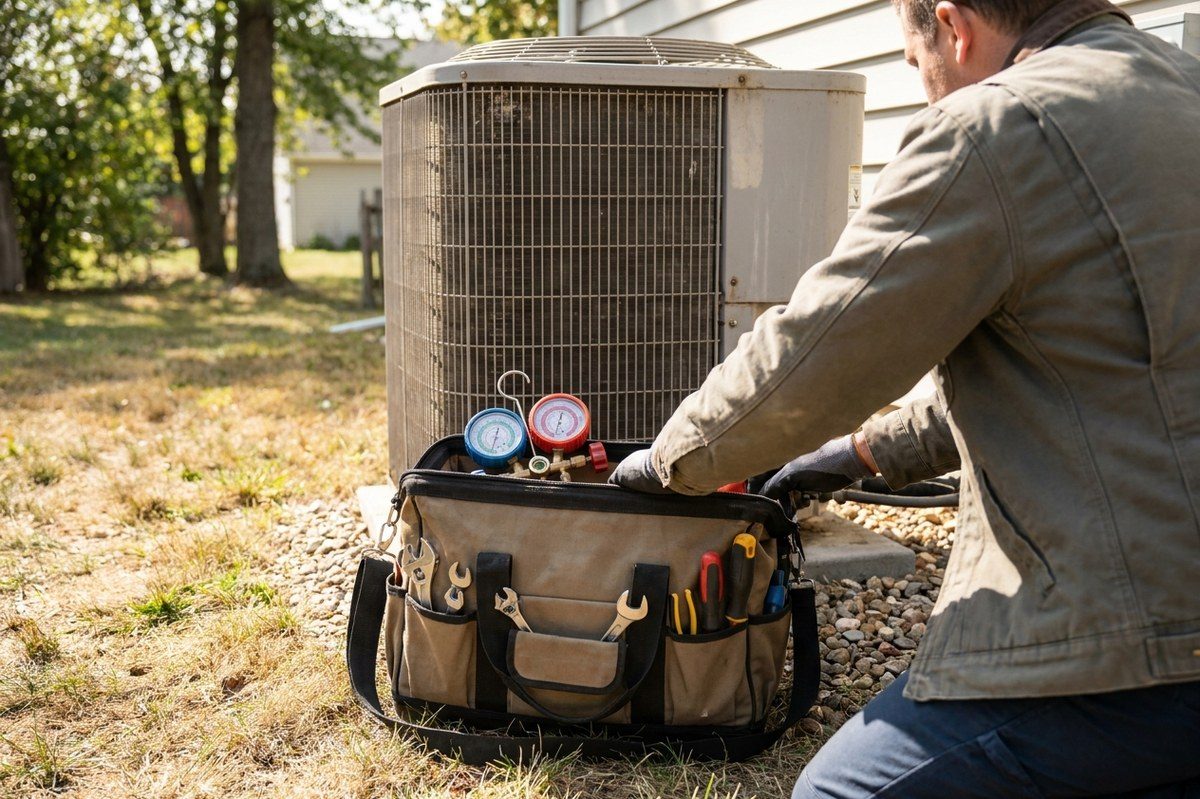
Phoenix Air Conditioning service team · field-reviewed before publishing
The First Five Minutes, In Order
1. Get every person and pet out of the house and into fresh air. Outside the front door is fine. 2. From outside, call 911 or your gas utility's emergency line. Both will come out and both take this seriously. 3. Do a head count and stay out until responders tell you the air is safe. 4. If anyone has a headache, nausea, dizziness, confusion or is unusually sleepy, tell the dispatcher on the phone. Those are carbon monoxide symptoms and they need medical attention, not fresh air alone. 5. Leave the alarm alone. It is doing its job and responders will want to see it still sounding.
What Not To Do
Do not go back inside for a phone, a bag or the cat once you are out. Send responders in instead. Do not press the reset or silence button to see if it sounds again, because you will lose the reading the fire department wants. Do not open every window and assume the problem is handled. Ventilation can drop the level below the alarm's threshold while the source keeps producing gas. Do not restart the furnace, water heater or any gas equipment. And do not troubleshoot gas lines, burners or the heat exchanger yourself. Carbon monoxide is colourless and has no smell, so you cannot judge it by feel.
Why A Heating System Sets Off A CO Alarm
Carbon monoxide comes from incomplete combustion, so any gas-fired equipment in the house is a candidate. On the systems we see across Arizona, California, Nevada and Utah, the usual causes are a cracked heat exchanger in a furnace or rooftop package unit, a blocked or disconnected flue, a corroded vent pipe, or a burner running dirty because it has been starved of air by a clogged filter. Attached garages matter too. A vehicle or generator running with the door partly shut will push exhaust into the return air path. An old alarm can also false-alarm past its end-of-life date, but you treat every alarm as real until someone with a meter says otherwise.
After The House Is Cleared, Call Us
Once the fire department or gas utility has ventilated the house and confirmed it is safe to re-enter, the equipment still needs a diagnosis before you run heat again. We come out, test combustion, inspect the heat exchanger, check the flue and vent connections for separation or rust, and confirm the unit is drawing the combustion air it needs. If the heat exchanger is cracked, we will tell you plainly and walk you through repair versus replacement. If it turns out to be a venting problem or a filter that choked the burner, that is often a same-visit heating repair. Either way you get a straight answer on what happened.
Keeping It From Happening Again
Put a carbon monoxide alarm on every level of the home and outside each sleeping area, and replace the whole alarm on the date printed on the back. Most are done at seven to ten years. Test them monthly and change the batteries on a schedule you will remember. Change your air filter regularly so the burner and blower get the airflow they were designed for. Never run a vehicle, generator or grill in the garage or near an intake. And have the heating side of the system inspected before the first cold night rather than during it. A furnace repair booked in autumn beats a no-heat call in January.
When it is time to book
Your CO Alarm Went Off — what people ask
My alarm chirped once and stopped. Is that carbon monoxide?
A single chirp every 30 to 60 seconds is usually a low battery or an alarm past its end-of-life date. A loud, repeating four-beep pattern is the real alert. If you are unsure which you heard, treat it as real and get outside first.
Can my AC produce carbon monoxide?
A straight electric air conditioner cannot, because there is no combustion. But many homes here run rooftop package units that cool and heat in one cabinet, and the gas heating section in those can absolutely produce carbon monoxide if the heat exchanger or flue fails.
Do I still need an inspection if the fire department found nothing?
Yes. Responders measure the air in the room, not the condition of your heat exchanger or flue. An intermittent crack can read clean by the time they arrive. Have the heating equipment tested before you run it again.
How it works
- Step 1
Tell us the symptom
Call or fill out the quote form. We ask what changed, when it started, and whether the outdoor unit is running. That tells us which parts and gauges to load on the truck before we leave.
- Step 2
We diagnose on site
We check the thermostat, the electrical side, airflow, refrigerant pressures, and the condenser coil. Desert dust plugs coils and dying capacitors are common. You get the finding in plain words before we touch a part.
- Step 3
Repair and verify
We make the repair, then run the system and measure supply air temperature and amp draw so we know it is actually cooling or heating. We tell you what we saw and what to watch for next season.
- A real person answers
- Open 7 days
- Written quote before work starts
Why homeowners call us
- We know rooftop unitsHalf the valley has a package unit on the roof, baking all summer. We are up there regularly, so we know how those cabinets fail, where the drain pans rust, and how heat and sun break down wiring and blower assemblies.
- Dust is the local enemyFine desert dust mats onto condenser coils and chokes airflow, and the system runs hot until something gives up. We check the coil on every call and tell you honestly whether cleaning will fix your cooling problem.
- July gets treated like JulyA dead condenser when it is 112 outside is not a routine call. We prioritise homes with no cooling, and we say clearly when we can be there instead of leaving you guessing all afternoon.
- Heating tooDesert nights get cold and furnaces sit unused for months. We do heater repair and furnace repair, including no-ignition problems, bad igniters, and blowers that hum without moving air. Same straight explanation, no upsell speech.
- All major brands, gas & electricIndependent service on Carrier, Trane, Lennox, Goodman, York and the rest.
- Straight answersIf a system is not worth repairing, we say so, often right on the phone.
About this guide
Past the safe checks, it's a job for tools and a meter
Tell us what you tried and what it did. The booking itself takes a minute.
- A real person answers
- Open 7 days
- Written quotes
- All major brands
- Gas & electric
Rather not call? Get a free quote →