
Top-rated independent heating and cooling across southern Nevada and the desert Southwest
Heating Season Prep, Step by Step
Your heater sat unused for six or seven months while the AC ran hard. Now the mornings are cold, you flip the thermostat to heat, and you smell dust or hear nothing at all. Before that happens, there are a few safe things you can check yourself, and a few things you want us to look at first.
Call (888) 560-0120- A real person answers
- Open 7 days
- Written quote before work starts
Taking calls until 5:00 PM PT
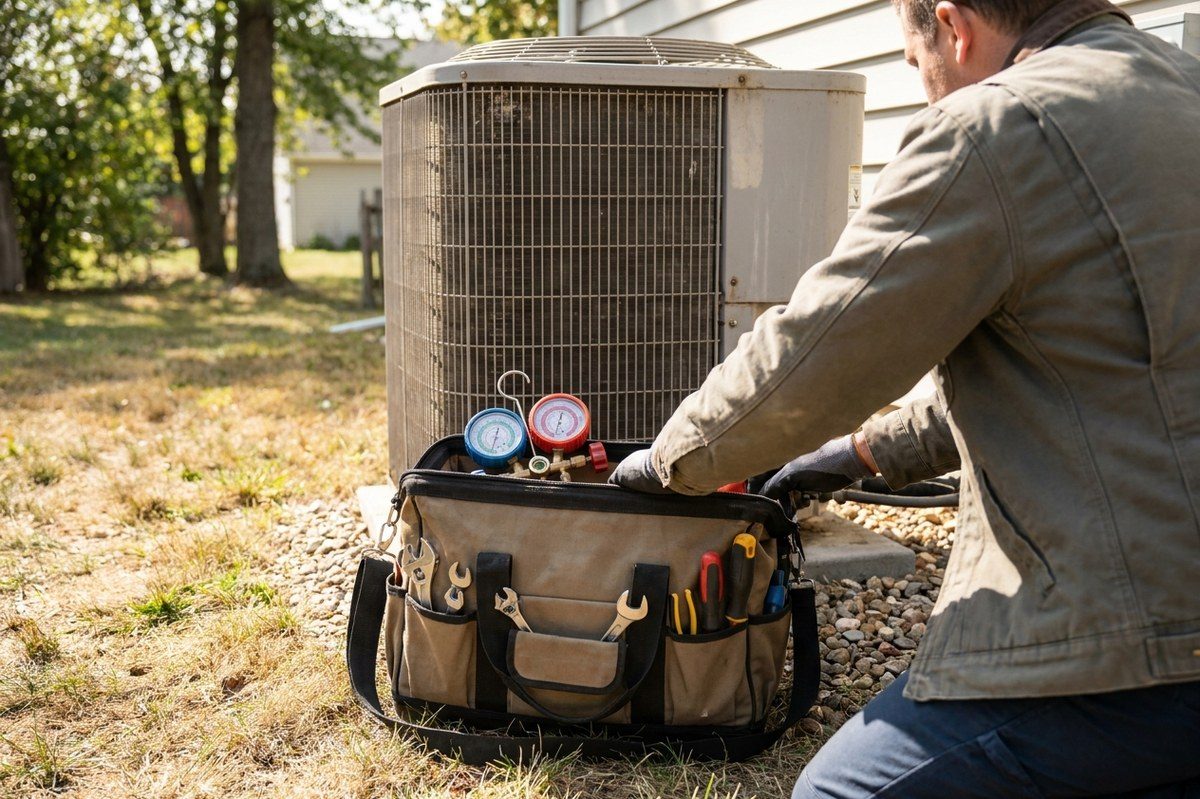
Phoenix Air Conditioning service team · field-reviewed before publishing
What the long cooling season does to your heat
Across Nevada, Arizona, California and Utah, the same equipment that cooled your house all summer is usually the same cabinet that heats it. Rooftop package units take the worst of it. Sun, dust and wind work on the cabinet seams, the flue, the wiring insulation and the blower wheel for months while the heat side sits idle. Dust settles on the burners and the heat exchanger. Rodents and birds find the quiet parts of the cabinet appealing. By the time you call for heat in late October, that heat exchanger has not fired since March, and anything that shifted or corroded over the summer shows up on the first run.When failures spike
The first cold snap is when the calls come
Our heating repair volume jumps within about 48 hours of the first real cold night of the season, usually mid to late fall depending on elevation. High desert and mountain areas in Utah and northern Nevada see it earlier than the low desert. The pattern is predictable: ignitors that were already weak fail on the first light, flame sensors coated with residue shut the burner down after a few seconds, and blower motors that ran all summer give out under a heat call. Rooftop units add a second wave when the first wind and rain arrive and a rusted flue or a loose panel becomes a real problem.
Safe checks you can do this week
Start with the thermostat. Fresh batteries, set to heat, and the setpoint a few degrees above room temperature so it actually calls. If nothing happens, check the breaker panel for a tripped breaker and the switch near the equipment. Change the filter, because a summer's worth of dust restricts airflow and a restricted furnace overheats and shuts itself off on the limit. Walk the house and confirm supply and return vents are open and not blocked by furniture. Outside or on the roof, clear leaves and debris from around the unit. That is where homeowner checks stop. Burners, gas valves, refrigerant and high voltage are ours.
If you smell gas or suspect carbon monoxide
Leave the building immediately. Do not flip switches, do not use the thermostat, and do not go looking for the source. Once everyone is outside and away from the structure, call 911 or your gas utility from a phone outdoors. After they have made the site safe, call us and we will handle the heating repair. Same order of operations if a carbon monoxide alarm sounds: people out first, emergency call second, our truck third. Test the carbon monoxide alarms in your hallways and near sleeping areas before heating season starts, and replace any unit older than its listed lifespan.
What we look at on a pre-season visit
We fire the unit and watch a full heating cycle from the call to the shutdown. That means checking ignition, the flame pattern, the flame sensor signal, temperature rise across the heat exchanger, static pressure and blower amp draw, plus the condition of the flue and the draft. On rooftop package units we also inspect cabinet seals, panel fasteners and the condensate path, because the summer sun degrades gaskets and a leaking cabinet moves dust straight into the airstream. Anything marginal gets flagged while the weather is mild and parts are easy to get. That is the whole point of doing it in the fall rather than in January.
Heating Season Prep, Step by Step — what people ask
Why does my heater smell like burning dust the first time it runs?
Dust settled on the heat exchanger and burners over the summer, and it burns off on the first cycle. A faint smell for ten or fifteen minutes is normal. If it lingers, smells sharp or electrical, or comes with smoke, shut it off and call us.
Do I need a pre-season check if the system is only a few years old?
Yes. Age matters less than run hours and dust exposure, and our climate delivers plenty of both. Newer equipment still gets clogged filters, dirty flame sensors, weak ignitors and wildlife in the cabinet. Catching those in fall beats a no-heat call in winter.
My heat pump runs but the air feels cool. Is it broken?
Heat pump supply air is cooler than furnace air, so it can feel weak even when it is working. If the house is not gaining temperature, or the outdoor unit is iced over or short cycling, call us for air conditioning repair and heating diagnostics on the same visit.
How it works
- Step 1
Tell us the symptom
Call or fill out the quote form. We ask what changed, when it started, and whether the outdoor unit is running. That tells us which parts and gauges to load on the truck before we leave.
- Step 2
We diagnose on site
We check the thermostat, the electrical side, airflow, refrigerant pressures, and the condenser coil. Desert dust plugs coils and dying capacitors are common. You get the finding in plain words before we touch a part.
- Step 3
Repair and verify
We make the repair, then run the system and measure supply air temperature and amp draw so we know it is actually cooling or heating. We tell you what we saw and what to watch for next season.
- A real person answers
- Open 7 days
- Written quote before work starts
Why homeowners call us
- We know rooftop unitsHalf the valley has a package unit on the roof, baking all summer. We are up there regularly, so we know how those cabinets fail, where the drain pans rust, and how heat and sun break down wiring and blower assemblies.
- Dust is the local enemyFine desert dust mats onto condenser coils and chokes airflow, and the system runs hot until something gives up. We check the coil on every call and tell you honestly whether cleaning will fix your cooling problem.
- July gets treated like JulyA dead condenser when it is 112 outside is not a routine call. We prioritise homes with no cooling, and we say clearly when we can be there instead of leaving you guessing all afternoon.
- Heating tooDesert nights get cold and furnaces sit unused for months. We do heater repair and furnace repair, including no-ignition problems, bad igniters, and blowers that hum without moving air. Same straight explanation, no upsell speech.
- All major brands, gas & electricIndependent service on Carrier, Trane, Lennox, Goodman, York and the rest.
- Straight answersIf a system is not worth repairing, we say so, often right on the phone.
About this guide
If the safe checks didn't fix it, the fault is real
Bring your notes from the checks to the call and booking takes no time.
- A real person answers
- Open 7 days
- Written quotes
- All major brands
- Gas & electric
Rather not call? Get a free quote →